Cek dokumentasi https://github.com/narakode/vue-auth-helper
Vue Auth Helper - Authentication system for API-based applications.
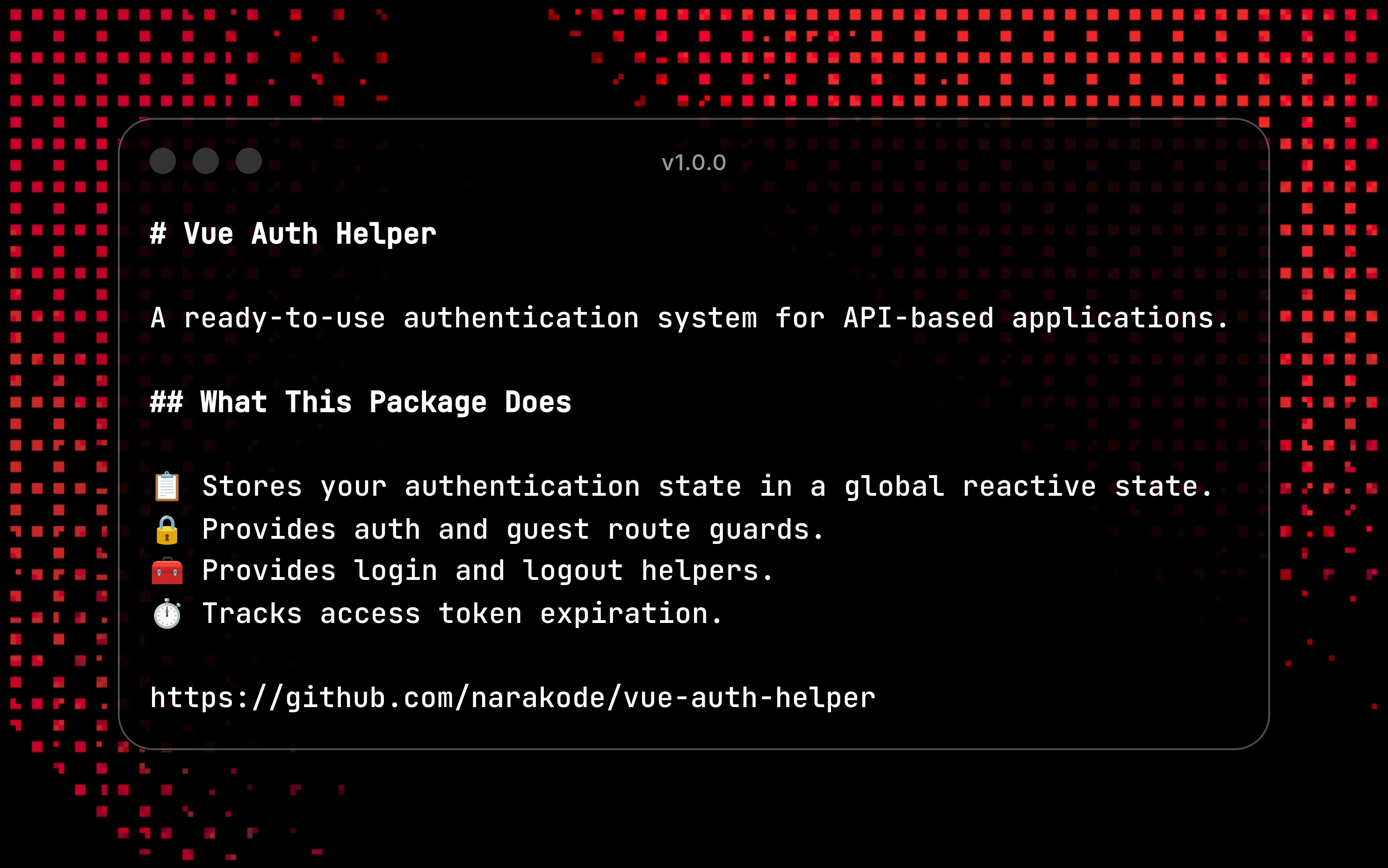
A package that provides a ready-to-use authentication system for API-based applications.
This package works seamlessly with Laravel FineAuth.
What This Package Does
- Stores your authentication state in a global reactive state.
- Provides
authandguestroute guards. - Provides
loginandlogouthelpers. - Tracks access token expiration.
What This Package Does Not Do
- Create a login page.
- Implement the authentication request to your API server.
- Automatically attach the access token to request headers.
- Automatically refresh the access token.
- Automatically fetch the current user.
Installation
Install the package.
npm install vue-auth-helperInstall it into your Vue application.
import { createApp } from 'vue';
import vAuth from 'vue-auth-helper';

const app = createApp();

app.use(vAuth);
Register the route guards with your router instance.
redirectOnUnauthenticatedspecifies the path to redirect unauthenticated users to.redirectOnAuthenticatedspecifies the path to redirect authenticated users to.
import { createRouter } from 'vue-router';
import { registerGuards } from 'vue-auth-helper';

const router = createRouter();

registerGuards(router, {
  redirectOnUnauthenticated: '/login',
  redirectOnAuthenticated: '/',
});
Guide
Login
You must implement your own API login flow.
After a successful login, your API should return the following values, then call the login helper.
token— a string.user— an object.expires_at(optional) — aDate, date string, or timestamp.meta(optional) — an object.
import { login } from 'vue-auth-helper';

login(token, user, expires_at, meta);
After logging in, you must manually redirect the user to the home or dashboard page.
Protect Routes for Guests and Authenticated Users
Add auth: true to routes that require authentication.
const router = createRouter([
  {
    path: '/',
    name: 'dashboard',
    meta: {
      auth: true,
    },
  },
]);
Add guest: true to routes that should only be accessible to guests.
const router = createRouter([
  {
    path: '/login',
    name: 'login',
    meta: {
      guest: true,
    },
  },
]);
Load Current User
The current user and meta are stored in memory, so they are cleared when the page is refreshed.
You need to call your API’s Get Current User endpoint when the application loads.
<script setup>
async function loadCurrentUser() {
  // ...
}

loadCurrentUser();
</script>
Refresh Token
The access token is stored in memory, so it is cleared when the page is refreshed.
You need to call your API’s Refresh Token endpoint whenever the application loads.
<script setup>
async function refreshToken() {
  // ...
}

refreshToken();
</script>
Check the Login State
import { loggedIn } from 'vue-auth-helper';

loggedIn.value; // true | false
Check Whether the Access Token Has Expired
import { isExpired } from 'vue-auth-helper';

isExpired(); // true | false
Access Token
import { accessToken } from 'vue-auth-helper';

accessToken.value; // 'jdaosjdosa' | null
Current User and Meta
Access the current user through the read-only user computed value.
Access the meta object through the read-only meta computed value.
import { user, meta } from 'vue-auth-helper';

console.log(user.value);
console.log(meta.value);
Logout
import { logout } from 'vue-auth-helper';

logout();
After logging out, you must manually redirect the user to
/login.